Rosters that cover every shift and keep to every rule.
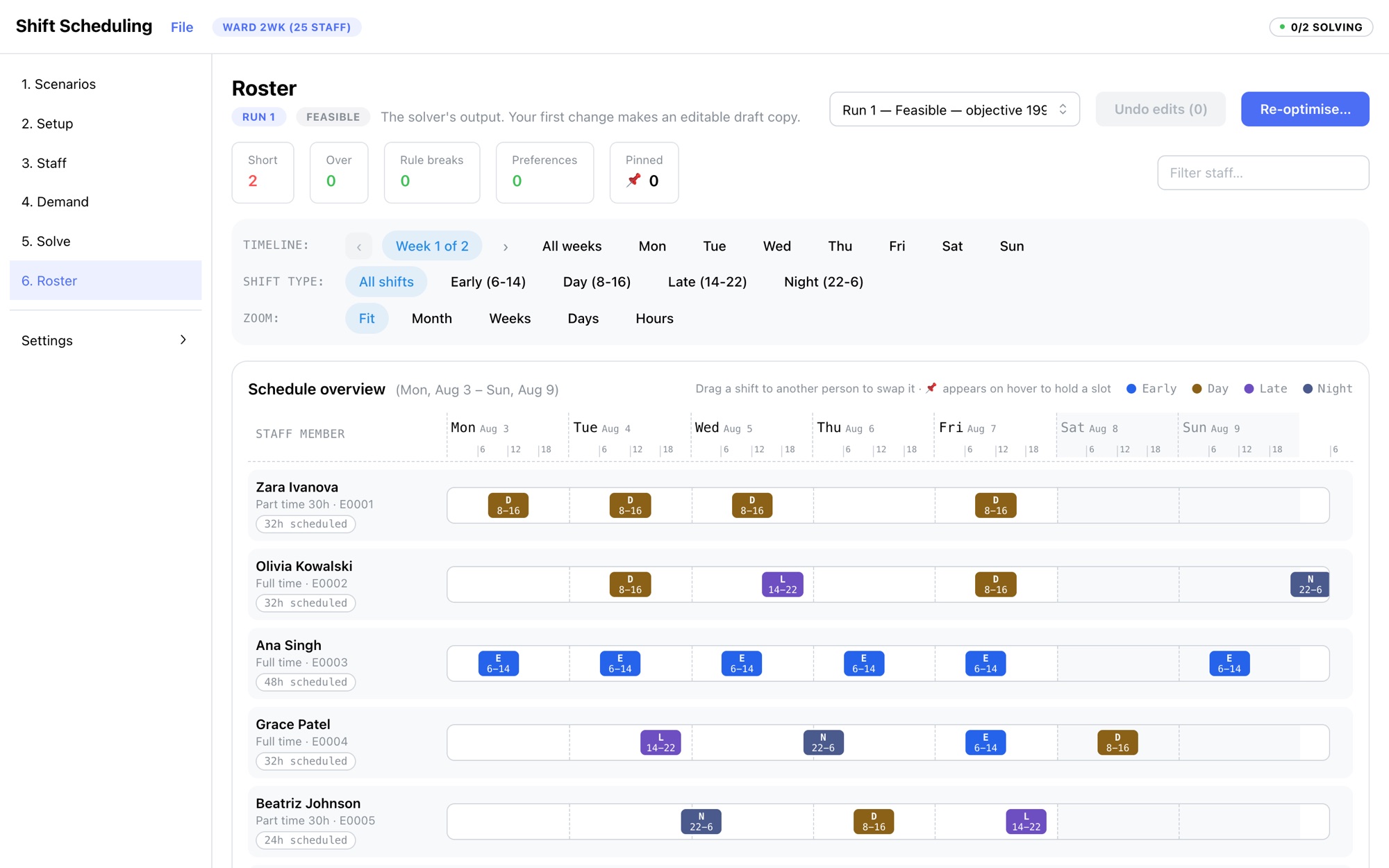
Shift Optimization builds a complete staff roster in seconds — every shift covered by the right skills, every contract respected, and staff requests honoured wherever the roster allows. Your rostering team spends its time on decisions, not spreadsheets.
- Seconds, not days
- A full roster comes back in seconds, so you can try a few versions before choosing one.
- Every rule kept
- Contracts, rest times and shift rules are built in, not checked by hand afterwards.
- Fair to staff
- Leave is respected, and shift requests are honoured wherever the roster allows.
- Easy to change
- Lock what has been agreed and rework the rest when someone calls in sick.
Rostering by hand costs more than time.
- Days of work every cycle Building a roster in a spreadsheet takes experienced people days — and much of it starts again when anything changes.
- Gaps found too late Short shifts and rule breaks often surface after the roster is out, when they are hardest to fix.
- Overtime and agency spend Shifts left uncovered end up filled at premium rates.
- Requests that slip through With dozens of people and hundreds of shifts, it is hard to see whose requests have been met and whose have not.
Anyone who staffs shifts by skill, around the clock.
- Hospital wards and departments Registered nurses, enrolled nurses and healthcare assistants across early, day, late and night shifts.
- Aged care Minimum care time and registered-nurse cover, delivered by a largely part-time workforce.
- Emergency and critical care Cover that cannot run short, with strict rest between shifts.
- Other 24/7 operations Control rooms, contact centres, security and transport crews — wherever shifts need particular skills.
From your team to a published roster in four steps.
-
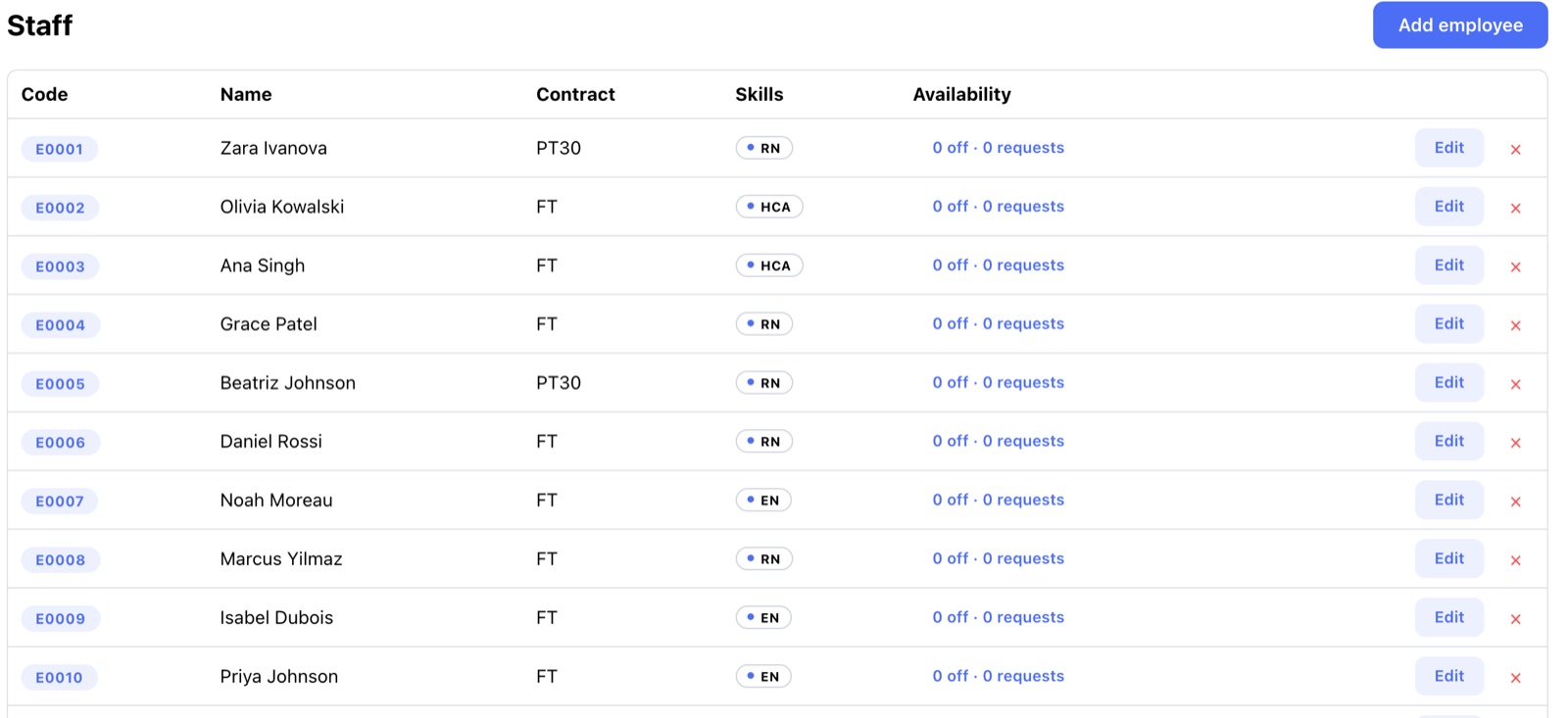
Describe your team
Each person's contract, skills, leave and shift requests.
-
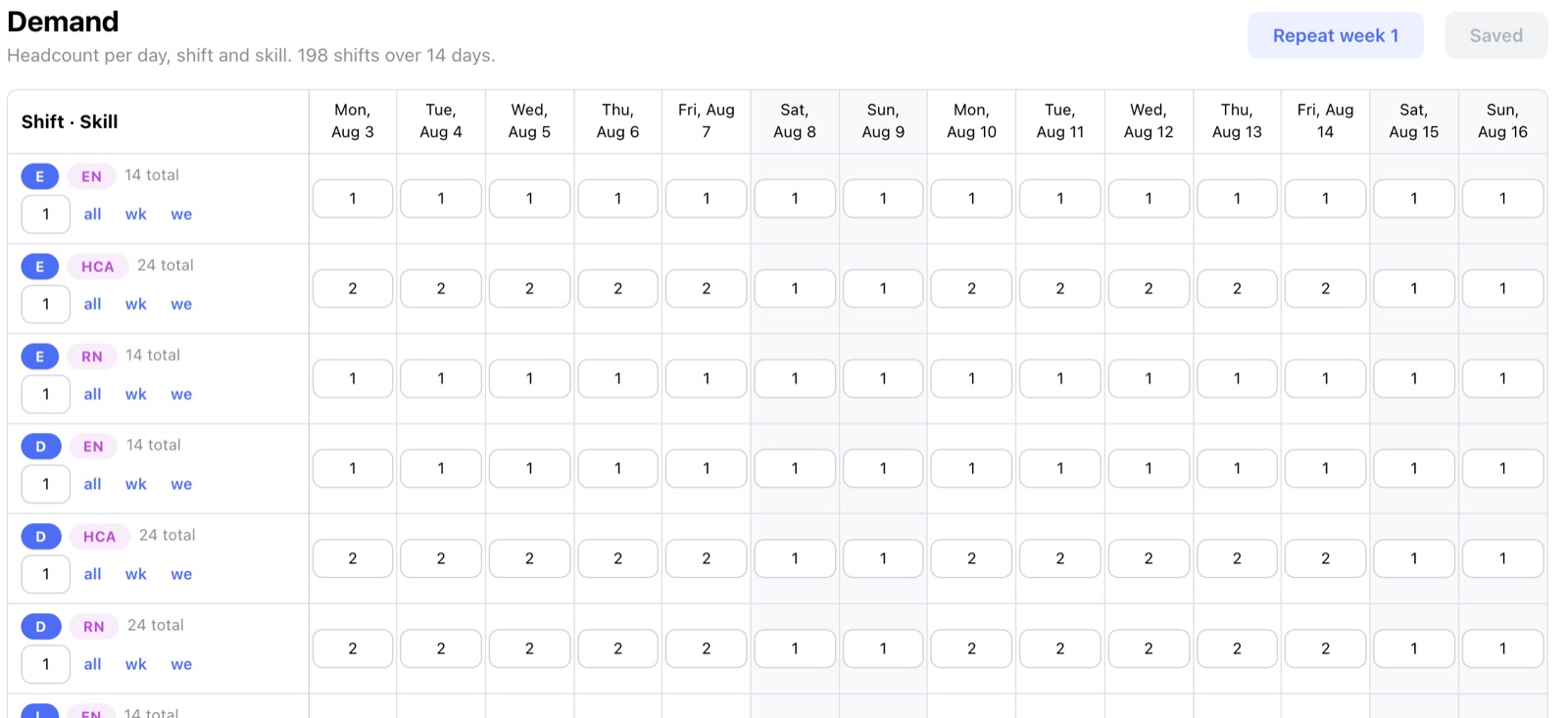
Set the cover you need
How many people each shift needs, by skill, for every day.
-
Get a roster in seconds
Everyone's shifts for the whole period, with anything short or over clearly shown.
-
Adjust and publish
Swap shifts, lock what must stay, and publish once staff have been told.
Built around the rules your organization already works to.
- Contracts Hours per week and over the roster, the number of shifts, runs of consecutive shifts, days off in a row, weekends worked, and minimum rest between shifts.
- Shift rules Patterns that are not allowed — no early shift straight after a night — and limits on particular shifts for each contract.
- Skills and cover Every shift is staffed by skill, so a registered nurse is never counted as a healthcare assistant. Cover can be strict, or allowed to bend when you decide it may.
- Leave and requests Time someone cannot work is always respected. Requests to work, or not to work, a shift are honoured wherever the rest of the roster allows.
A sick call shouldn't mean starting again.
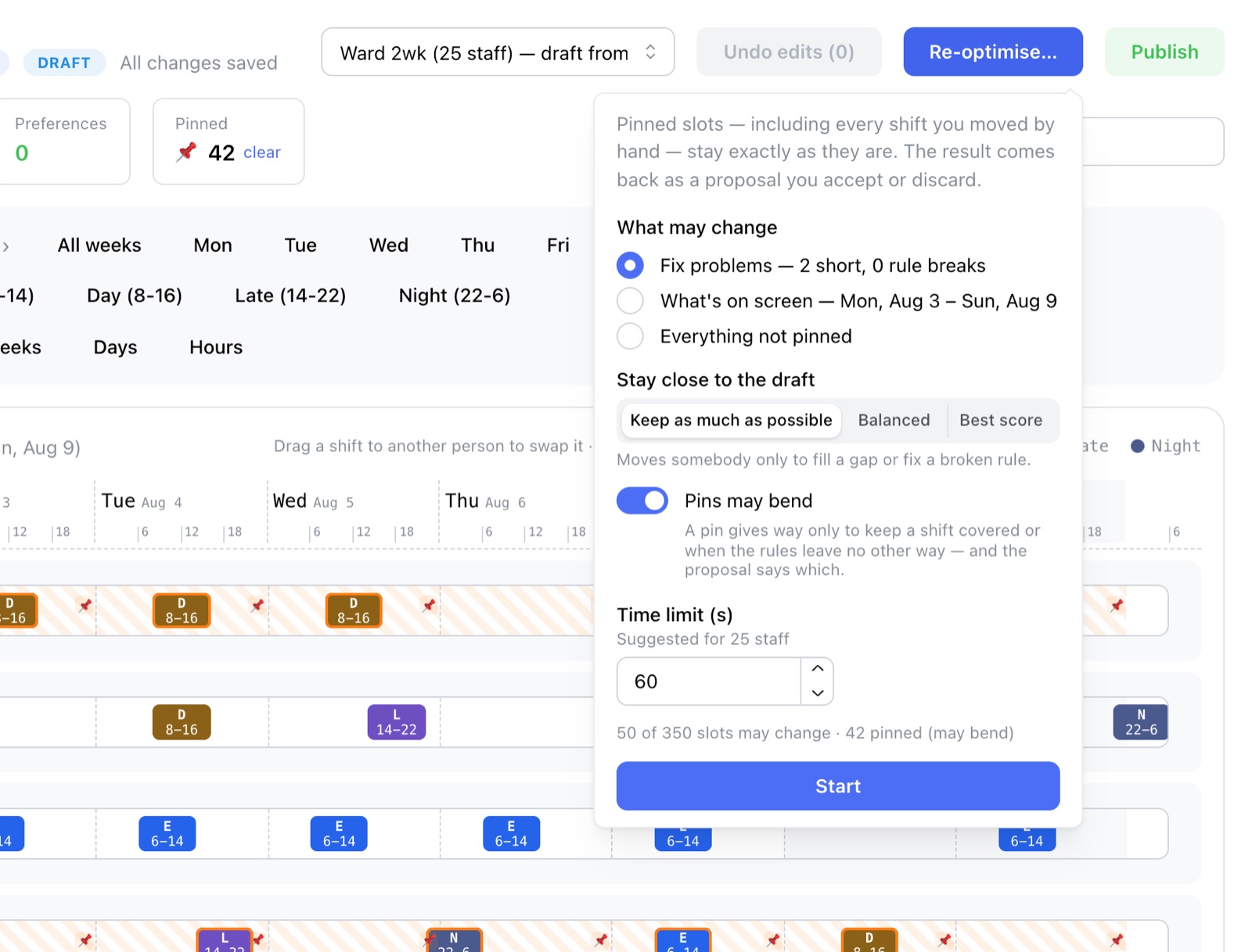
Rosters change after they are made. Lock the shifts that must not move — a whole person, a day, a single shift — and let Shift Optimization rework the rest.
You choose how much may change: only what is broken, the week on screen, or everything not locked. The result comes back as a proposal, person by person, for you to accept or discard — so staff who have already been told see as few changes as possible.
Set up for you, around how you work.
We configure Shift Optimization around your contracts, shift patterns and cover rules, so it fits your organization from day one. No specialist knowledge is needed on your side — your rostering team works with people, shifts and rules they already know.
Want to know what is under the hood? Read the technical details on the Gradient Optimization site.
See what it would do with your roster.
Tell us about your team — how many people, which shifts, and how you roster today — and we will show you what Shift Optimization would do with it.